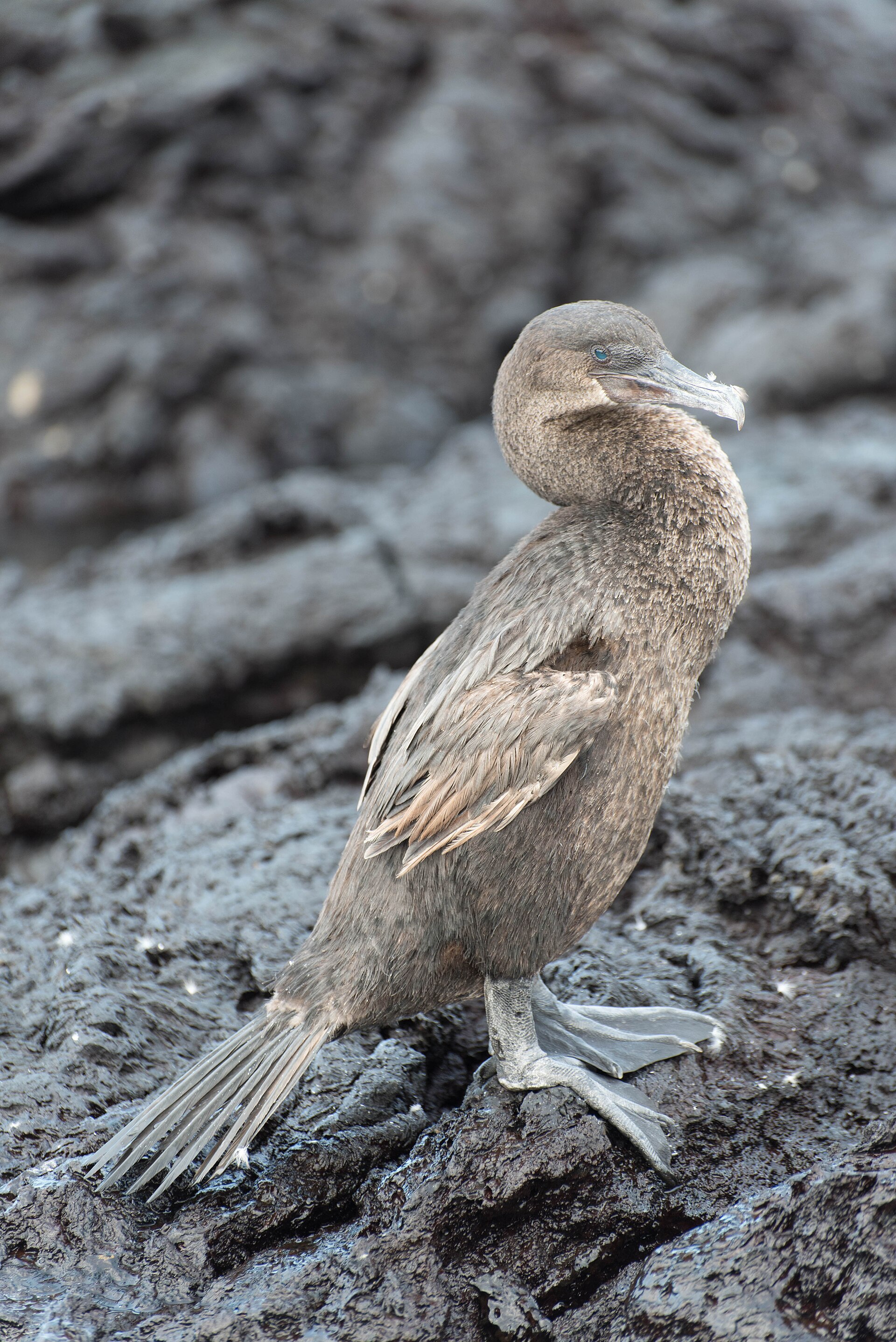
Evolution at the edgeGalápagos
Nannopterum harrisi
The diver that left flight behind.
Isolated on fish-rich volcanic shores, the Flightless Cormorant traded large wings for a heavier body and exceptional underwater power.
A field atlas of Phalacrocoracidae
Meet the world’s cormorants and shags—expert divers shaped by coast, current, cliff, and inland water.
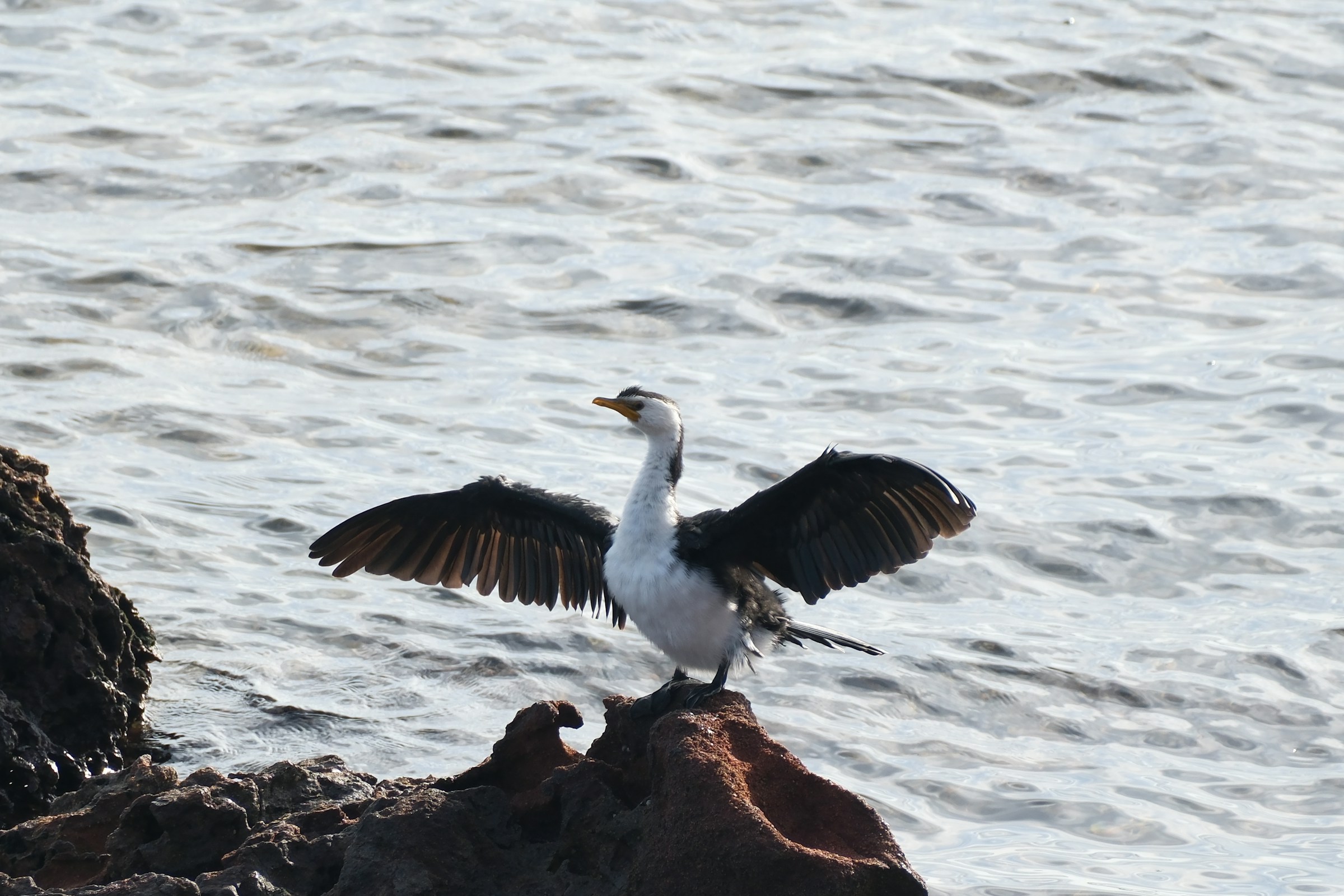
Wings open to the wind
after a foraging dive
One form.
Many waters.
Cormorants are pursuit divers: long-bodied waterbirds that chase fish below the surface, driven by powerful webbed feet. They live on every continent except the high interior of Antarctica.
The names cormorant and shag are historical, not scientific divisions. Modern checklists place both in a single family, Phalacrocoracidae.
Nannopterum harrisi
Isolated on fish-rich volcanic shores, the Flightless Cormorant traded large wings for a heavier body and exceptional underwater power.
The dive kit
Cormorant plumage traps less air than a duck’s, reducing buoyancy underwater. That makes diving efficient—and helps explain the family’s familiar wing-drying posture.
The complete world index
Search all 34 recognized species by name or field mark, then narrow the index by region and conservation status—including the extinct Spectacled Cormorant.
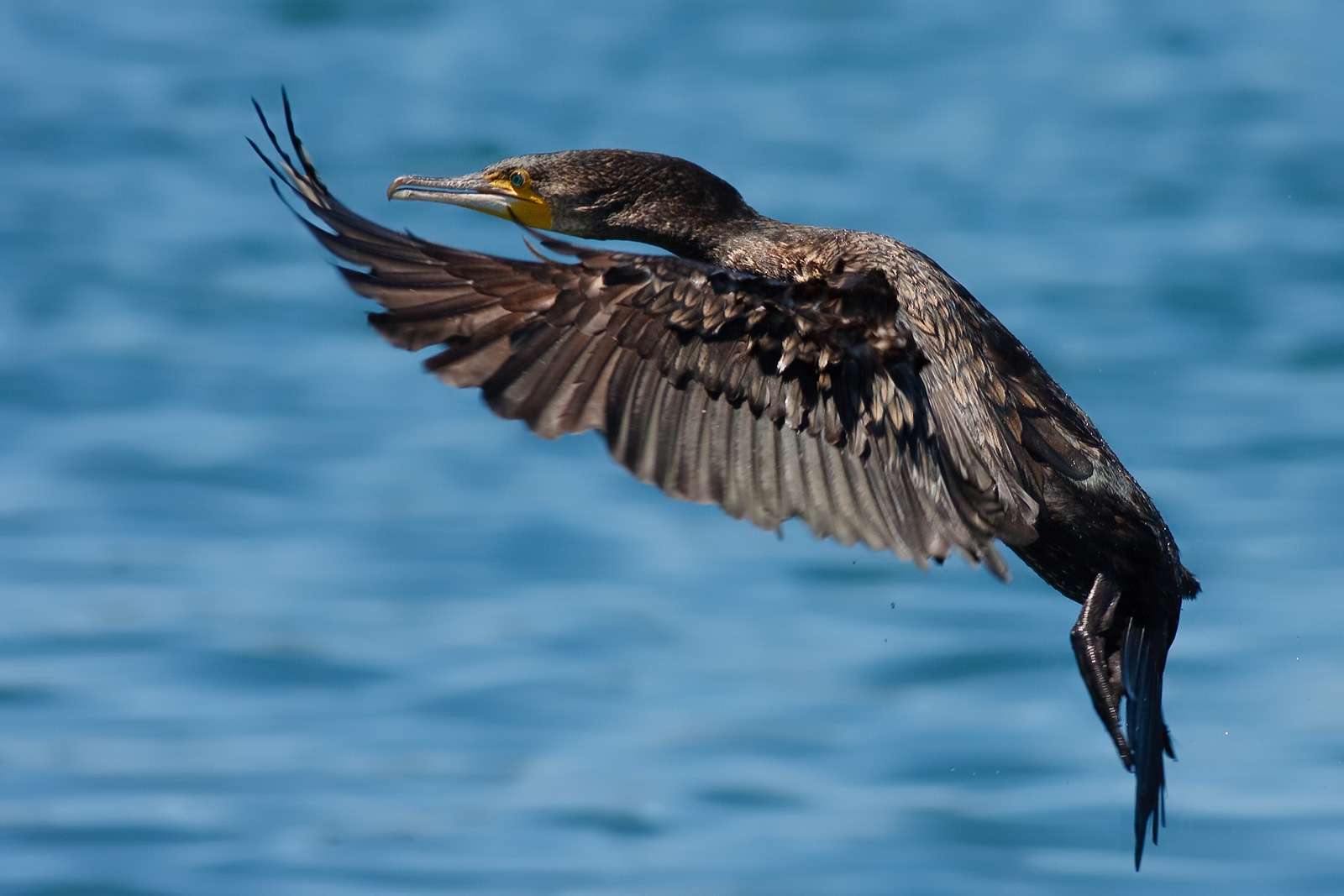
A heavy, blocky-headed cormorant with an exceptionally broad range across the Old World and beyond.
Found only around Fernandina and Isabela in the Galápagos; the world’s only living flightless cormorant.
A lithe, green-glossed marine specialist closely tied to rocky coasts and offshore islands.
Compact and delicate-billed, often nesting on steep sea cliffs from Japan to western North America.
A richly ornamented Bering Sea species, with red facial skin and pale breeding plumes.
A small, short-billed cormorant occurring in both boldly pied and darker plumage forms.
A social hunter of Australia and nearby islands, sometimes fishing in coordinated flocks.
A small freshwater cormorant widespread across the Indian subcontinent and Southeast Asia.
A sleek South Asian species with a distinctive blue-green eye and a relatively long, thin bill.
A widespread African freshwater species, often seen fishing alone around vegetated margins.
A compact coastal endemic of Namibia and western South Africa, closely associated with kelp shores.
A small cormorant of southeastern Europe and western Asia, favoring lowland freshwater wetlands.
A regional Gulf and Arabian Sea endemic that forms immense, densely packed breeding colonies.
A schooling seabird of the productive Benguela Current, threatened by food-web change and disturbance.
A colonial black-and-white cormorant whose guano deposits once supported a major coastal industry.
The family’s most colorful outlier, living along the Pacific coast of South America.
A robust blue-eyed shag of southern South America, often nesting in vast, noisy colonies.
A striking black-and-white shag of southern Chile, Argentina, and the Falkland Islands.
Restricted to New Zealand’s tiny, storm-lashed Bounty Islands, where nearly the entire population breeds.
A rare marine endemic confined to a small cluster of breeding sites in New Zealand’s Marlborough Sounds.
A polymorphic New Zealand shag occurring in pied and dark forms around Otago, Foveaux Strait, and Stewart Island.
A critically endangered island endemic with a very small population breeding only in the Chatham archipelago.
Confined to the remote Auckland Islands south of New Zealand, where it forages close to rugged shores.
A subantarctic endemic found only around Campbell Island and its offshore stacks.
The largest recent cormorant, known from the Commander Islands and extinct since the nineteenth century.
An endangered southwestern African endemic dependent on the cold, productive Benguela Current.
A large coastal cormorant of northeast Asia and the traditional species used in Japanese cormorant fishing.
A slender endangered shag found only around the Chatham Islands, especially Pitt and adjacent islands.
A distinctively patterned New Zealand marine shag with a long crest and yellow-green facial skin.
A marine specialist of southern Australia and Tasmania, usually seen along exposed rocky coasts.
A large black-and-white cormorant of Australia and New Zealand, formerly widely called the Pied Cormorant.
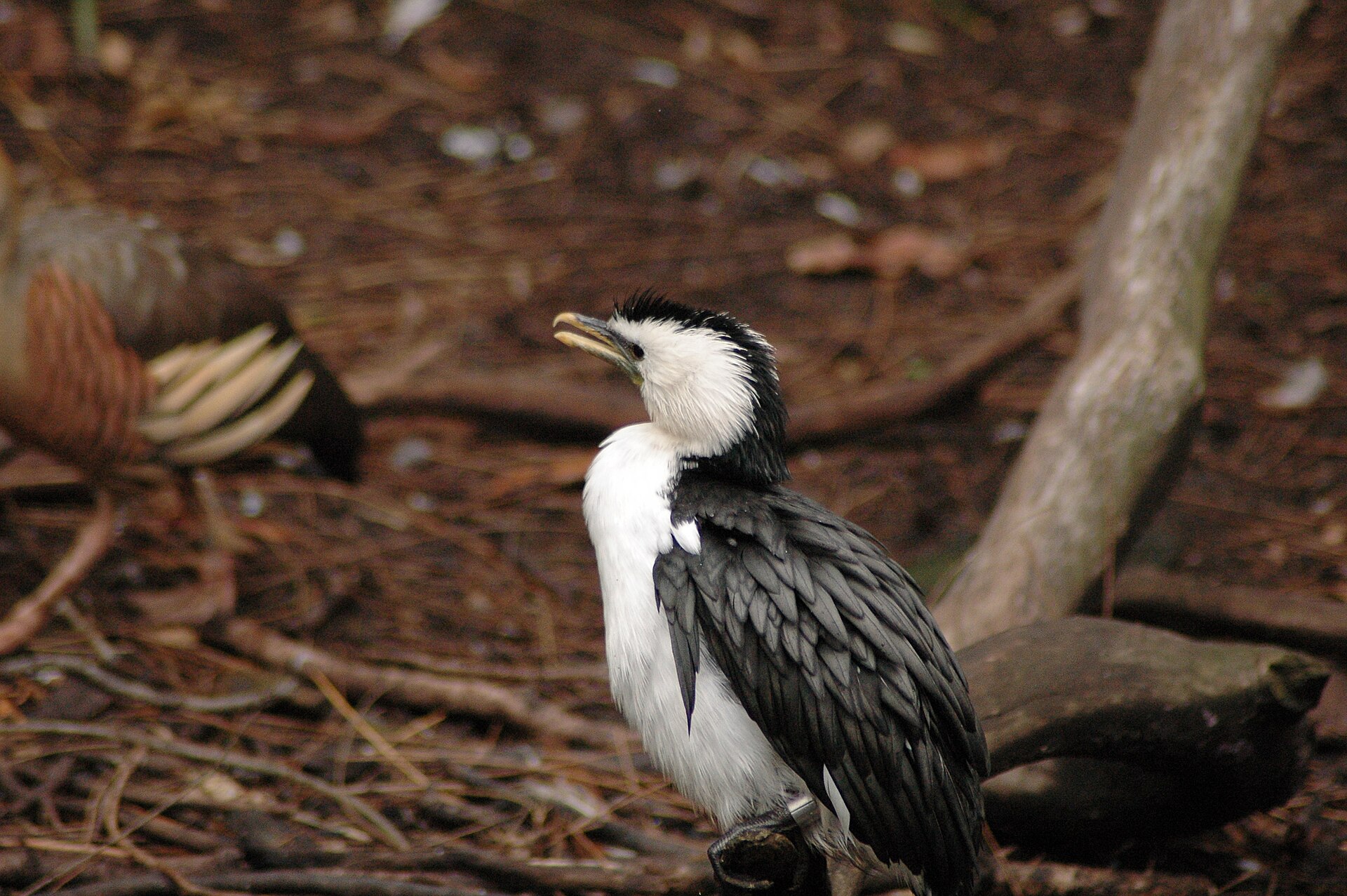 Microcarbo melanoleucos
Compare bill weight, tail length, body bulk, and head shape.
Open coast, sheltered bay, and inland wetland each narrow the field.
Crests, white filoplumes, colored skin, and thigh patches can be brief.
Flight style, flocking, perch choice, and foraging pattern all carry clues.
Reading the signal
Many cormorants remain widespread. Others depend on a single current system, island group, or narrow coastal strip. Oil pollution, entanglement, disturbance, invasive predators, and shifts in prey can quickly reshape those populations.
Least Concern
Near Threatened
Vulnerable
Endangered
Critically Endangered
Extinct
Not Evaluated
Taxonomy changes as evidence improves. The family count, names, sequence, and complete 34-species index follow AviList v2025b, including the extinct Spectacled Cormorant. Conservation labels are concise reference signals, not substitutes for live species assessments.