Adult
Brown-black overall, with a long hooked bill, orange-yellow facial skin, and a jewel-like turquoise eye.
Species profile
Nannopterum auritum
The familiar North American cormorant: long-necked, heavy-bodied, and equally at home on a coastal bay or a broad inland lake.
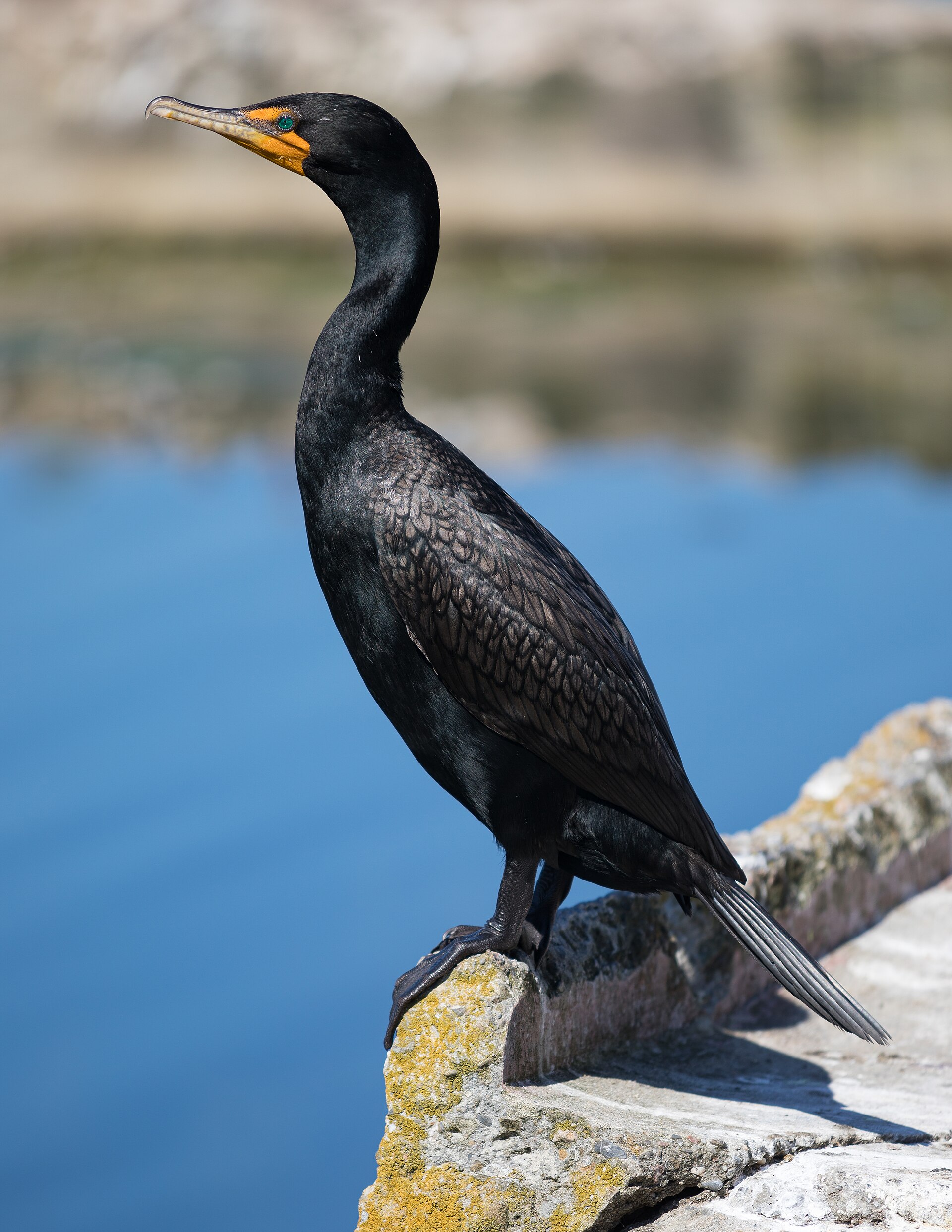
Double-crested Cormorants are powerful foot-propelled divers. They ride low on the water, disappear with a small forward leap, and pursue fish below the surface before returning to exposed rocks, pilings, trees, or docks to rest.
The two namesake crests are seasonal and often surprisingly difficult to see. A more dependable clue is the broad patch of yellow-orange bare skin around the bill and chin, set against dark brown-black plumage and a bright aquamarine eye.
Field identification
Brown-black overall, with a long hooked bill, orange-yellow facial skin, and a jewel-like turquoise eye.
Develops paired tufts of black or white feathers behind the eyes. The crests vary by region and can lie flat.
Browner than adults, often with a pale tan neck and breast, but already showing the species’ large frame and orange face.
Habitat · food · nesting · behavior
Where it lives
Found on large lakes, rivers, reservoirs, estuaries, lagoons, and sheltered marine coasts. Colonies need nearby fishing water and safe places to perch or nest.
What it eats
The diet is overwhelmingly fish, taken by underwater pursuit. Crustaceans, amphibians, and aquatic insects are occasional additions.
How it nests
Pairs build broad stick platforms in trees, on islands, or directly on the ground. Both adults incubate the pale blue eggs and feed the young.
What to watch
After fishing, birds commonly stand upright with wings spread. In flight they alternate choppy wingbeats and short glides, often in shifting lines or V formations.
Widespread and currently considered of low conservation concern. Populations recovered strongly after historic persecution and pesticide-era declines, though local colonies still face disturbance and conflict around fisheries.